History of wireless technologies
Though the scientific world had been aware of both electricity
and magnetism separately for a long time, the connection
between the two had not been noticed until the 19th century.
Reports in the early 19th century about the connection were
largely unnoticed by the scientific community. In 1820, Hans
Christian Oersted accidentally discovered that a current
carrying wire caused a magnetic needle in a compass to deflect,
and became the first to record evidence of the relationship between electricity and magnetism. Soon various theories
of electromagnetism, notable ones being from Andre Marie
Ampere, etc., were in circulation.
Yet the existence of electromagnetic waves was not even
imagined until the 1850s, when Maxwell published his theories
of electromagnetism. In a paper named “A dynamical theory
of the electromagnetic field”, Maxwell published his views
regarding the existence of electromagnetic waves. He also
summarised all that was known about electromagnetism at
that time into the four famous Maxwell equations. Much of the
groundwork to his beliefs had been laid by Michael Faraday,
who established concepts such as electromagnetic induction,
and theorised that electric and magnetic fields extend beyond
conductors into the space around them.
In the 1870s and the 1880s, a volley of patents were filed
in the United States for devices that could transmit and receive
electromagnetic waves. While many of these took huge leaps
of imagination, some were quite close to the modern idea of
radio. Notable among these attempts, were some by the famed
inventor Thomas Alva Edison.
The first major milestone towards wireless transmissions
was achieved between 1886 and 1888 by Heinrich Rudolf Hertz,
after whom the SI unit of frequency is today named. Hertz
demonstrated the transmission
and reception of radio signals
and was the first person to
do so. He also discovered that
Maxwell's equations could
be reformulated to form a
differential equation, from
which could be derived the
wave equation.
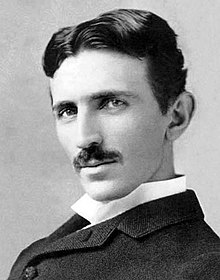
Yet the true birth of
modern wireless can be seen
in Nikola Tesla’s famous article
“the true wireless”. He soon
demonstrated the transmission
and reception of radio waves,
and then gave a lecture on
the principles of wireless communication.
This era also witnessed
various simultaneous
developments in this area.
The Indian physicist Jagdish
Chandra Bose famously used
electromagnetic waves to
detonate a cannon and ring
a bell at a distance (in 1894),
yet showed no interest in
patenting it. The first meaningful
communication through wireless
was demonstrated by Oliver
Lodge who in 1894 devised a way
to transmit Morse code through
radio waves. Other notable
contributors in the field include
the Russian inventor Alexander Popov and the New Zealander
Earnest Rutherford.
However the lion’s share of the credit for modern wireless
goes to Guglielmo Marconi, who besides being the British patent
owner for the first viable radio telecommunications system, is
also responsible for commercially developing and deploying the
technology. He opened a radio factory
in England, employing fifty men.
In 1901, Marconi conducted the
first experimental transatlantic radio
communication transmissions. By
1907, this had been commercialised,
leading to the first transatlantic
radio communication link, between
Newfoundland and Clifden, Ireland. Marconi’s company, British
Marconi, and its American subsidiary, American Marconi,
soon started commercially producing ship to shore wireless
communication systems and went on to monopolise this sector.
The first steps towards wireless telephony were taken by the
German company Telefunken. Founded as a joint venture of the
Siemens & Halke company and the General Electric company
of Germany, the company created the only semi-permanent
wireless link between Europe and North America.
The next significant step in the development of wireless
communication technologies came with the invention of
the amplitude modulated (AM) radio. This allowed radio
transmission by various stations at the same time, using
different frequencies, as opposed to the then popular spark gap
technology, which covered the whole allotted spectrum. This
was achieved by Reginald Fessenden, who also managed to
transmit violin music and Gospel readings over the air, to the
delight of many ships at sea.
In 1909, the Nobel Prize in Physics was awarded to
Guglielmo Marconi for his contributions to radio telegraphy
technologies.
1909 also saw the development of radio broadcasting as we
know it, with Charles David Harrolds, a professor of electronics
from San Jose, setting up a radio station that continuously
transmitted music and voice. Harrolds, the son of a farmer, set
up the definitions for the terms broadcasting and narrowcasting
(transmissions meant for a single recipient). Today, his station
has grown into the KCBS San Jose station.
With the sinking of the Titanic in 1914, regulations were
implemented that made it mandatory for all ships to have ship
to shore radios manned 24 hours. This gave a huge boost to the
then fledgling radio industry and propelled the world into a
new era of radio telegraphy, and eventually radio telephony.
In 1916, the first radio station
to broadcast daily was established
by Harold Powers. With his
company American Radio and
Research Company (AMRAD)
the station, call-signed 1XE,
became the first to broadcast
dance programs, university lectures, news, weather and even
bedtime stories. The year 1920 witnessed the birth of the first
broadcasting station for entertainment based in Argentina.
Significant credit for the popularisation of audio radio must be
given to the invention of the radio audio detector that saw the
replacement of radio telegraphy.
In the 1920s, with the invention of the vacuum tube, the
till then popular crystal set, based on spark gap technology,
became obsolete. These radios, however, still have a huge fan base among niche group of
hobbyists, notably the Boy
Scouts of America. Radio
technology continued to
improve through the 1920s
into the 1930s with the improvement of vacuum tube, the
invention of the early ancestors of diodes, etc. Some of the
major contributors to these achievements was Westinghouse
laboratories, based in the USA and, as always, Marconi.
The next great leap in the field of radio came in 1933 with
the development of FM. This revolutionary technology insulated
the signal from external electronic interference and allowed
the transmission of crystal clear audio and other signals across
radio waves. However its technological features limited its usage
to short range (a city wide, for example) applications.
With the end of World War 2, radio stations and devices
spread across Europe and the rest of the world. Soon, radio
became a commonplace device. The 1950s witnessed the rapid
miniaturisation of radio receivers thanks to the discovery of
transistors and diodes. Over the next 20 years, transistors
replaced vacuum tubes in all applications except the most
specialised.
The 1960s witnessed a new revolution in wireless
communications with the advent of communication satellites. With
the launch of Telstar – the first communications only satellite, it
became possible to transmit across the world, beyond the line of
sight. Communication satellites stay in geostationary orbit .
The late 1960s also witnessed the digitisation of radios,
mainly in long distance telephone networks. The 1970s saw
the advent of radio and satellite navigation systems, originating
from attempts by the US navy to precisely navigate their ships.
In 1987, the GPS system of satellites was launched.
The 1990s witnessed the
birth of various technologies
merging computers and other
devices such as mobile phones,
PDAs and wireless technologies.
Wireless LAN, Bluetooth,
etc., are the offspring of this
revolution.
It is interesting to note that a form of radiotelegraphy
survives to this day. With a high level of automation in
encryption and decryption, Telex is a communication medium
of choice for businesses such as the banking industry. It is
capable of transmitting information and directly printing it.
If you liked this article then please Follow Us on Facebook
By Amrut Deshmukh